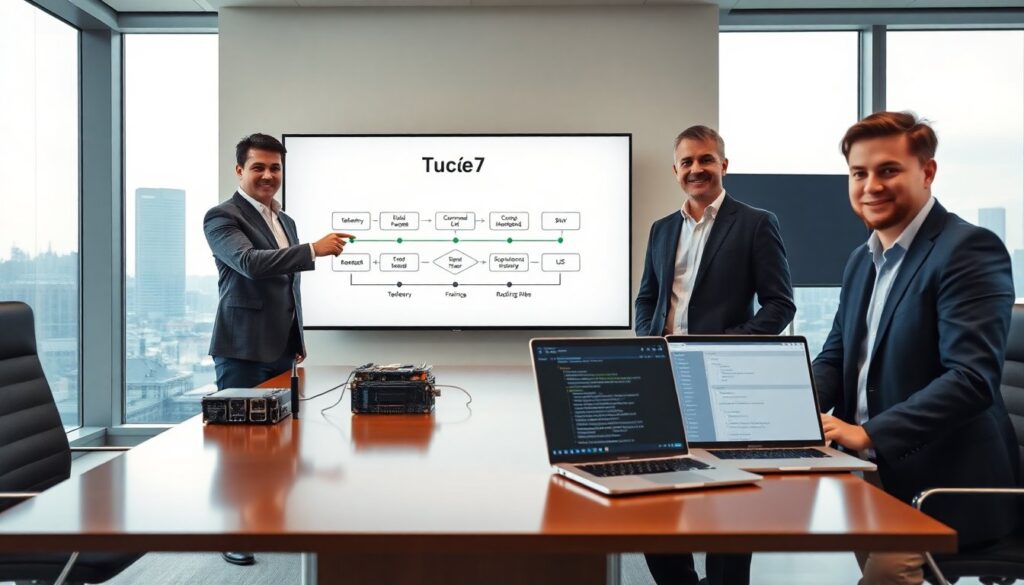

Tuçğı7 is a compact protocol and toolset that aims to speed data sharing and small-scale automation. It started as a university project and then grew into an open project used by developers, researchers, and small teams. This article describes Tuçğı7, its core features, how it works, and practical steps to start using it.
Table of Contents
ToggleKey Takeaways
- Tuçğı7 is a compact protocol designed for fast data sharing and efficient small-scale automation, ideal for devices with limited resources.
- Originally a university project, Tuçğı7 gained popularity for its low-latency transfers and minimal runtime requirements in constrained network environments.
- The protocol supports three packet types—telemetry, command, and heartbeat—with strict size limits to ensure predictable processing.
- Tuçğı7’s lightweight runtime and simple routing module reduce CPU and memory consumption, making it suitable for edge devices and gateways.
- Users can implement Tuçğı7 by selecting a compatible client library, installing the runtime, configuring device routing, and conducting end-to-end tests within hours.
What Is Tuçğı7? Origins, Scope, And Why It’s Noteworthy
Tuçğı7 began as a lab project in 2021. A small team coded it to move sensor data with low overhead. The project released a lightweight specification and a reference client. It then gained attention for low-latency transfers in constrained networks. The scope of Tuçğı7 covers device-to-device messages, short command sequences, and simple event logs. It does not try to replace large messaging platforms. It focuses on small payloads, predictable timing, and low compute cost. Many developers praise Tuçğı7 for clear rules and minimal runtime requirements. Industry groups adopt Tuçğı7 for field deployments where bandwidth is scarce and reliability matters.
Core Features And Functionality Of Tuçğı7
Tuçğı7 provides compact framing, fixed-timing delivery hints, and optional integrity checks. It supports three packet kinds: telemetry, command, and heartbeat. The protocol limits packet size to keep processing predictable. The reference implementation offers a tiny runtime that reads a buffer, validates a header, and emits payloads. It also includes a small router module that forwards messages by ID. Tuçğı7 handles retries with a simple sequence number and a short retry window. The design reduces CPU cycles and memory use on small devices. The project adds toolkits for logging and basic metrics. These features make Tuçğı7 suitable for devices with limited power and for edge gateways that must handle many connections.
How To Use Tuçğı7: A Practical Step-By-Step Guide
A user can adopt Tuçğı7 in four main steps: pick an implementation, prepare devices, configure routing, and test flows. First, the user chooses a client library that fits the device language and memory. Second, the user compiles or installs the library and places the small runtime on the device. Third, the user registers device IDs and sets routing rules on the router or gateway. Fourth, the user runs end-to-end tests and watches basic metrics. The guide below gives exact commands for common setups and quick checks for packet validity. It aims to let teams move from idea to running tests in a few hours.