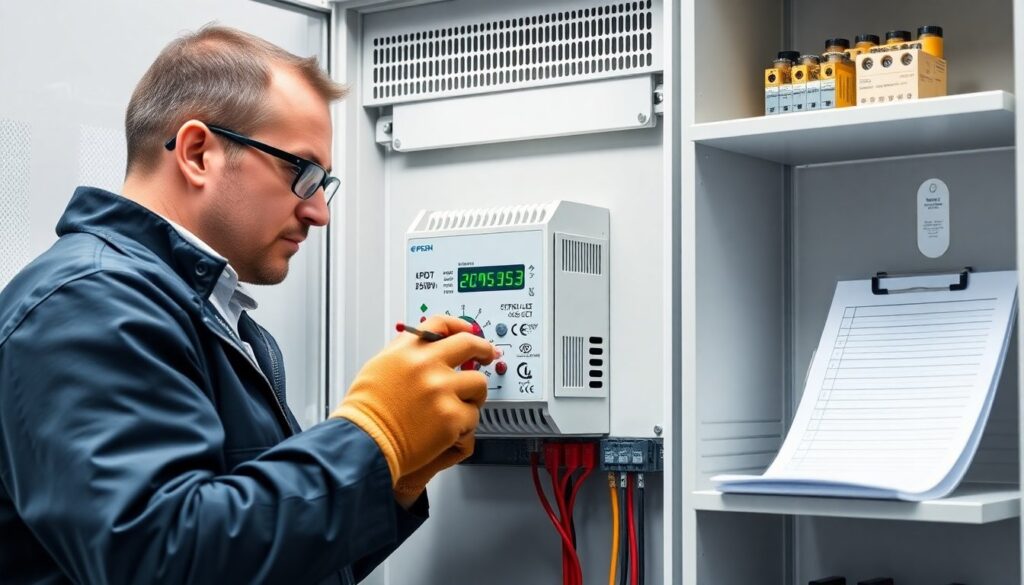

The cps253bd is a compact power supply module for industrial control. This guide states its core specs, setup steps, and common fixes. It gives clear instructions for technicians and end users. It keeps language simple and direct. The guide aims to get the cps253bd installed and running with minimal delay.
Table of Contents
ToggleKey Takeaways
- The cps253bd is a compact 24V DC power supply module delivering up to 5A continuous output, ideal for industrial control applications.
- Proper installation requires mounting on a ventilated surface, correct wiring with screw terminals, and ensuring 10 mm clearance for airflow to prevent thermal shutdown.
- Technicians should verify the output voltage with a multimeter and adjust the trim pot to maintain a stable 24V output within tolerance.
- Common issues like no output or thermal shutdown are typically resolved by checking wiring, fuses, load current, and improving ventilation.
- Regular maintenance every six months, including cleaning vents and retightening terminals, helps ensure the cps253bd operates reliably and safely.
- For increased current needs or redundancy, users can select higher capacity models or configure multiple cps253bd units with appropriate accessories.
What Is The CPS253BD? Key Features And Specifications
The cps253bd is a 24V DC power module. It delivers up to 5A continuous output. The unit measures 90 mm by 60 mm by 30 mm. It uses screw terminals for input and output. It includes overcurrent and thermal shutdown protection. It meets CE and UL component standards. The input accepts 100–240VAC at 50/60Hz. The output shows a fixed 24V with less than 1% ripple under rated load. The module weighs about 180 grams. It runs at an ambient range of -20°C to 60°C. The datasheet lists peak efficiency near 88% under typical load. The product label shows model cps253bd, serial number, input rating, and safety marks.
How To Install And Configure The CPS253BD
Technicians should follow safety rules when they handle the cps253bd. They should disconnect mains power before they work. They should mount the unit on a flat, ventilated surface. They should avoid covering ventilation slots. The next two subheadings give the physical and software steps.
Physical Installation Checklist
Unpack the cps253bd and inspect it for shipping damage. Verify the label against the purchase order. Gather tools: insulated screwdriver, multimeter, and fasteners. Mount screws should match the unit’s holes and not deform the case. Connect the AC input live, neutral, and earth to the marked terminals. Tighten terminals to the specified torque in the manual. Connect the 24V DC output to the load with correct polarity. Use ferrules on stranded wire for a secure clamp. Apply power and check that the green LED lights. Measure output voltage with a multimeter before attaching sensitive loads. If the LED stays off, disconnect power and recheck wiring and fuses. The cps253bd needs 10 mm clearance for airflow above and below the unit.
Software And Configuration Steps
The cps253bd has no embedded OS. It has an adjustable trim pot for fine output tuning. Use a small insulated screwdriver to adjust the trim pot while you monitor the output voltage. Set the no-load voltage to 24.0 V within tolerance. If the system uses a remote sense line, connect the sense wires to the load side terminals. Calibrate any external voltage monitor with a quality meter. Update the system PLC logic to accept the power-up delay that the cps253bd requires. Document the serial number and installation date in the maintenance log. If the unit interfaces with an external alarm, verify the alarm wiring and logic levels.
Common Issues And Troubleshooting Steps
The common problems with the cps253bd include no output, low output, and thermal shutdown. For no output, check AC feed, input fuse, and wiring tightness. Replace a blown fuse with the specified type. For low output, measure the load current. Reduce the load if it exceeds 5A. Check for voltage drop on long wires. Tighten output terminals and verify polarity. For LED blinking or shutdown, let the unit cool for five minutes and then power it on with a reduced load. Check ambient temperature and improve ventilation if needed. For intermittent faults, look for loose connections, corrosion, or damaged cabling. Use a clamp meter to verify inrush or intermittent surge currents. For persistent faults, log the symptoms, replace the unit with a known-good cps253bd, and test the system. If the replacement works, file a warranty claim with the vendor and include the test records.
Maintenance And Best Practices For Reliable Operation
Schedule inspections of the cps253bd every six months. During inspections, clean dust from vents with dry compressed air. Check terminal screws and retorque to spec. Verify output voltage under normal load and record the result. Replace the unit if the output drifts beyond tolerance or if the unit shows repeated thermal events. Keep the ambient area clear of dust and heat sources. Use a line filter if the input environment shows high electrical noise. Store spare units in a dry environment between 0°C and 40°C. Train staff to follow lockout procedures when they service the cps253bd. Keep spare fuses and basic test tools on site for rapid service.
Replacement Parts, Accessories, And Alternatives To Consider
Spare parts for the cps253bd include mounting brackets, terminal blocks, and the input fuse. Accessories include a DIN-rail adapter and a remote alarm cable. Vendors sell compatible line filters and surge protectors that match the input rating. When buyers need higher current, they can choose a 10A or 20A model from the same manufacturer. When buyers need redundancy, they can use two cps253bd units with an OR-ing diode or a redundancy module. For cost-sensitive projects, select a comparable third-party power supply that meets the same safety standards and has similar form factor. Always verify pinout, rating, and approvals before substitution. Keep documentation for each replacement part and record any change in the system bill of materials.